Rewrite Your
Gene Story
Break Free from Inherited Patterns & Unlock the Life You Were Always Meant to Live
Your DNA is not your destiny. The stories written into your cells — by ancestors, experiences, and unconscious belief — can be rewritten. This is your guide to doing exactly that.
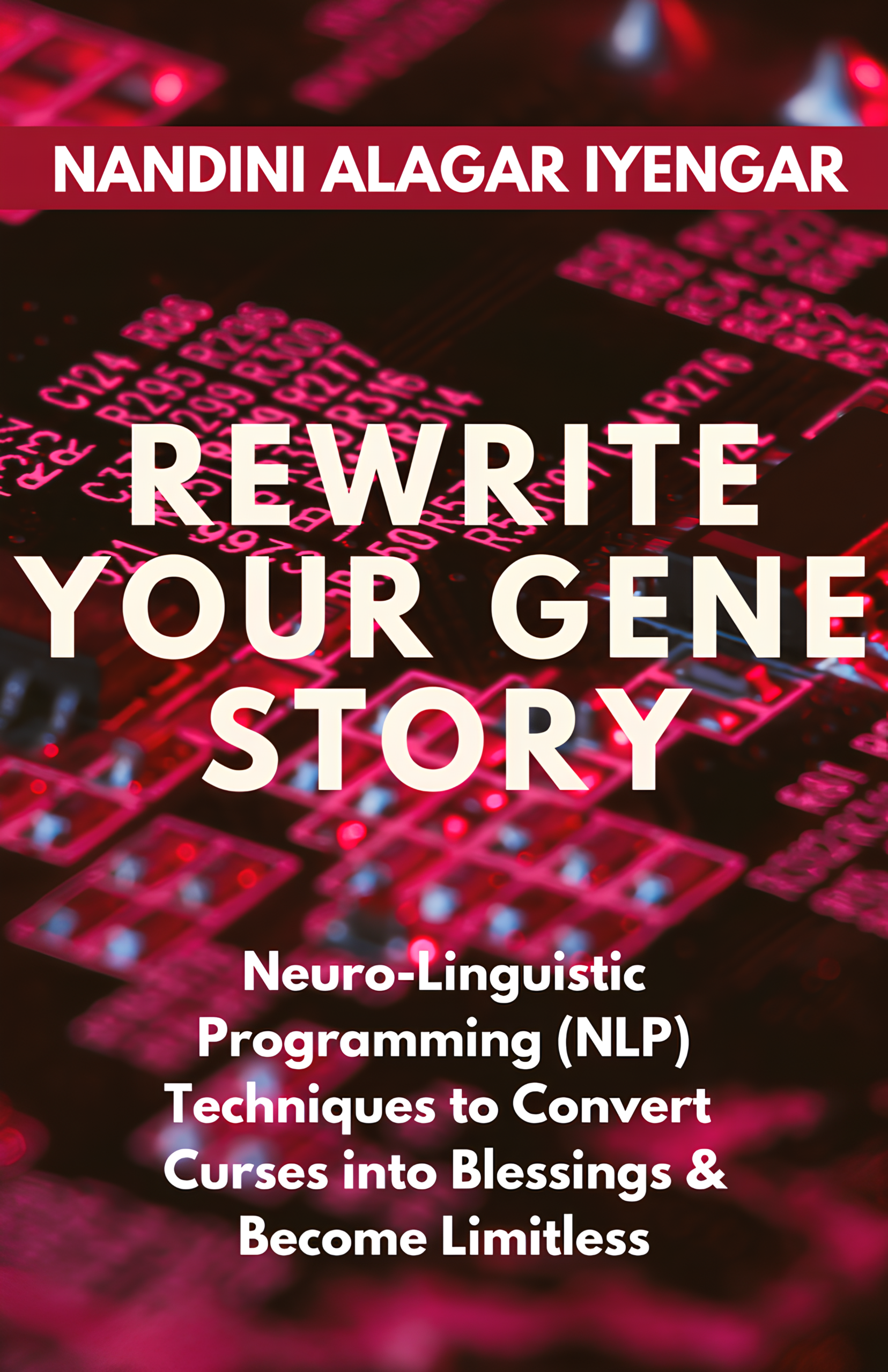
You Are Not the Sum of What Was Written Before You
For decades, science told us that our genes determined our destiny — that the patterns inherited from our parents, grandparents, and generations before were fixed lines of code, immutable and final. Modern epigenetics tells a profoundly different story. And Rewrite Your Gene Story brings that story to you — in language that is clear, warm, immediately actionable, and genuinely life-changing.
Written by bestselling author, NLP practitioner, and mindset transformation coach Nandini A. Iyengar, this book is a complete guide to identifying the inherited emotional programmes, limiting beliefs, and ancestral conditioning that are silently shaping your thoughts, relationships, health, and outcomes — and to using the proven tools of NLP, epigenetics, and subconscious reprogramming to rewrite them at the source.
"Your genes carry the stories of those who came before you. But you — and only you — hold the pen for the next chapter." — Nandini A. Iyengar
This is not motivational fluff. It is a scientifically grounded, practically structured, deeply compassionate roadmap for one of the most important journeys a human being can take: the journey from inherited limitation to chosen identity — from the gene story you were given to the gene story you consciously write.
Order on Amazon →Six Transformative Gifts Within These Pages
-
✦
The Science of Epigenetics — Made AccessibleUnderstand how your thoughts, emotions, environment, and beliefs literally influence gene expression — and why this is the most empowering scientific discovery of our era.
-
✦
NLP Tools for Subconscious ReprogrammingPractical, step-by-step NLP techniques that rewire neural pathways, dissolve limiting beliefs, and install empowering new patterns at the deepest level of the mind.
-
✦
Ancestral Pattern RecognitionA guided framework for identifying the inherited emotional programmes — fear, scarcity, unworthiness, avoidance — that you did not choose but have been unconsciously running.
-
✦
Inner Child & Emotional Healing PracticesCompassionate, evidence-based practices for healing the early emotional wounds that continue to drive adult behaviour long after the original experience is forgotten.
-
✦
New Identity ArchitectureA complete system for consciously designing the beliefs, values, and self-concept that will govern your next chapter — built by you, for you, from the inside out.
-
✦
Daily Integration PracticesMorning rituals, journalling prompts, somatic practices, and NLP anchors that embed your new gene story into the fabric of everyday life — sustainably and joyfully.
Your biology is not your biography.
Epigenetics PrincipleThe mind is the body's greatest pharmacy.
NLP WisdomWhat you believe about yourself becomes the story your cells tell.
Rewrite Your Gene StoryTwelve Chapters. Twelve Breakthroughs.
Each chapter of Rewrite Your Gene Story targets a specific layer of inherited programming — and gives you the precise tools to dissolve, rewrite, and replace it with something that genuinely serves who you are choosing to become.
Your Gene Story — What It Is & Where It Comes From
An accessible introduction to epigenetics and NLP — how inherited experience, trauma, and belief become encoded in the body's chemistry, and why this is the starting point for all lasting change.
The Invisible Scripts Running Your Life
Identify the unconscious programmes — the fear loops, scarcity stories, unworthiness patterns — that were installed in your earliest years and have been quietly directing your choices ever since.
Ancestral Inheritance — What Your Family Passed On
Beyond genetics, families transmit emotional patterns, survival strategies, relational templates, and worldviews. This chapter maps your ancestral emotional inheritance and begins the work of conscious separation.
The Neuroscience of Belief
How beliefs form, how they wire the brain, how they filter reality — and crucially, how neuroplasticity makes every belief system revisable, regardless of how long it has been in place.
NLP Foundations — The Technology of Mind Change
A clear, practical introduction to Neuro-Linguistic Programming — the proven methodology for reprogramming the subconscious mind that underpins every transformation technique in this book.
The Inner Child — Healing the Root
The emotional wounds of early childhood are the deepest roots of inherited limitation. This chapter provides compassionate, evidence-based inner child healing practices that address the cause, not merely the symptoms.
Rewriting Limiting Beliefs with NLP
Step-by-step NLP techniques — including submodality shifts, timeline therapy principles, and belief change protocols — that allow you to dissolve a limiting belief and consciously install its empowering replacement.
Epigenetics in Action — How Your Story Affects Your Biology
Practical applications of epigenetic principles — how your emotional state, self-talk, relationships, and daily choices are constantly communicating with your genome, and how to make that conversation a conscious one.
Identity Redesign — Becoming the Author
Move from inherited identity to chosen identity. A complete NLP-based framework for defining who you are choosing to be — your values, your self-concept, your relationship with possibility — and embedding it at every level of your neurology.
Relationships & the Family System
How gene stories play out in our closest relationships — the patterns we unconsciously repeat, the dynamics we attract, and the NLP tools that allow us to engage with family and partners from conscious choice rather than conditioned reaction.
Health, Body & the Mind-Gene Connection
The cutting-edge research on how emotional states, chronic stress, unresolved trauma, and belief patterns manifest in physical health — and the practical mind-body practices that begin to reverse those manifestations.
Living Your New Gene Story — Integration & Legacy
The final chapter is about embedding the new story so completely that it becomes the natural expression of who you are — and about the profound gift of transmitting a new, healthier emotional inheritance to the generations that follow you.
Nine Life Areas This Book Rewrites
Inherited patterns touch every dimension of life. This book maps the nine core areas where gene stories play out most powerfully — and gives you the tools to consciously rewrite each one.
Identity & Self-Worth
The foundational story — "Who am I and what do I deserve?" — rewired from its inherited roots to a conscious, empowering foundation that holds regardless of external circumstance.
Subconscious Beliefs
The 95% of mental activity that operates below conscious awareness — identified, examined, dissolved, and replaced with beliefs that actively support your goals and wellbeing.
Love & Relationships
The attachment patterns, relational templates, and love maps inherited from family — rewritten so that you can love and be loved from wholeness rather than wound.
Money & Abundance
The scarcity stories, financial fears, and generational money wounds that silently sabotage prosperity — identified at the root and replaced with an abundant, deserving relationship with wealth.
Health & Body
The mind-body epigenetic connection — how emotional patterns become physical symptoms, and how the body begins to heal when the story it has been told is finally rewritten.
Purpose & Career
The inherited beliefs about what you are "supposed" to do, what you are "allowed" to want, and what level of success is "appropriate" for someone like you — dissolved and replaced with authentic, self-authored ambition.
Fear & Emotional Safety
Ancestrally inherited fears — of failure, visibility, abandonment, authority — recognised, metabolised, and released so that courage becomes your natural default rather than your daily effort.
Patterns & Habits
The behavioural loops — procrastination, self-sabotage, people-pleasing, perfectionism — that are not character flaws but inherited coping strategies. Understood with compassion and upgraded with intention.
Legacy & Future Generations
The most profound motivation of all — rewriting your gene story is not just a gift to yourself. It is a gift to every child, student, colleague, and descendant who carries a piece of your story forward.
Eight Reasons This Book Produces Real Change
This is not positive thinking. It is not journalling your way to a new mindset. It is a scientifically grounded, NLP-powered, deeply practical system that reaches the layers of the mind where lasting change actually lives.
Grounded in Real Science
Epigenetics, neuroplasticity, and NLP are not new-age concepts. They are rigorously researched fields whose findings are revolutionising medicine, psychology, and personal development worldwide.
Practical Tools, Not Just Insights
Every chapter closes with specific, step-by-step NLP exercises, journalling prompts, and somatic practices you can begin immediately — not someday, not after another book, right now.
Addresses the Root, Not the Symptom
Most self-help works on behaviour. This book works on belief — the layer beneath behaviour where every pattern, habit, and recurring struggle actually originates.
Written with Extraordinary Compassion
Inherited patterns are not character flaws. They are survival strategies from another time. This book treats every reader — and every pattern — with the compassion they deserve.
NLP Expertise You Can Feel
Nandini is a trained NLP practitioner with 20+ years of coaching experience. The techniques in this book are not borrowed from other books — they are the ones she has field-tested with thousands of clients.
No Prior Knowledge Required
You do not need a background in psychology, genetics, or NLP. The book explains everything it asks of you — in language that is clear, engaging, and immediately understandable.
Mind, Body & Spirit — Integrated
The book does not separate mental reprogramming from emotional healing, or physical wellbeing from spiritual identity. It treats you as the whole, interconnected being that you are.
A Gift to Every Generation
When you rewrite your gene story, you interrupt an inheritance chain. The patterns end with you. The new story begins with you. That is one of the most courageous, loving things a human being can do.
Why Epigenetics Changes Everything We Thought We Knew About Ourselves
For the greater part of the 20th century, the dominant model of human biology was essentially deterministic. Your genes, the story went, were your destiny. The traits, tendencies, and even the diseases encoded in your DNA were the fixed architecture of who you were and what your life would contain. You could work around your genes, perhaps, but you could not rewrite them. This was the foundational assumption behind everything from medical diagnosis to career counselling to family therapy — and it was, as it turns out, only part of the story. A small, increasingly outdated part.
The field of epigenetics — literally "above the gene" — has fundamentally disrupted this model. What epigenetic research has demonstrated, across decades of rigorous scientific investigation, is that gene expression is profoundly malleable. Genes do not simply switch on and produce predetermined outcomes. They are switched on and off, amplified and suppressed, by a complex interplay of factors that include our environment, our nutrition, our relationships, our stress levels — and above all, our thoughts, emotions, and deeply held beliefs. The same genetic sequence can produce dramatically different outcomes depending on the psychological and emotional context in which it is expressed.
This is not a fringe position. It is the conclusion of mainstream epigenetic science as it has developed through the work of researchers at institutions including Harvard, Stanford, and the Max Planck Institute. The implications are staggering. If the expression of our genes is influenced by our inner world — by what we believe, fear, hope for, grieve, and love — then the boundary between psychology and biology dissolves. We are, in the most literal scientific sense, participants in the creation of our own biological reality. The story we tell about ourselves is not merely a metaphor. It is a biological event.
This is where NLP — Neuro-Linguistic Programming — becomes the perfect partner for epigenetic transformation. NLP was developed as a methodology for modelling and replicating excellence in human performance, but its deepest application is in the reprogramming of the subconscious belief systems that govern our automatic responses to life. These are precisely the systems that epigenetic research has shown to have biological consequences. NLP works not at the level of conscious intention — which is why willpower alone so rarely produces lasting change — but at the level of the neurological patterning that runs beneath consciousness. Together, the insights of epigenetics and the tools of NLP offer something genuinely unprecedented: a complete, scientifically coherent framework for rewriting the inherited story at the level where it is actually encoded.
Five Stages from Inherited Story to Authored Life
The book follows a carefully designed five-stage arc — a complete transformation journey from unconscious inheritance to conscious, joyful self-authorship.
Stage 1 — Awareness: Seeing the Story That Has Been Running
You cannot change what you cannot see. The first stage uses NLP diagnostic tools and reflective exercises to surface the inherited programmes that have been operating below the threshold of conscious awareness — the fear patterns, the scarcity loops, the unworthiness beliefs — making them visible, nameable, and therefore, for the first time, changeable.
Stage 2 — Understanding: Where It Came From & Why
Every inherited pattern was once a solution to a problem. Ancestors who survived scarcity developed scarcity consciousness as a protective strategy. Parents who were hurt by vulnerability taught their children emotional guardedness as a gift. This stage cultivates a compassionate understanding of the origins of your patterns — because patterns understood are far easier to release than patterns judged.
Stage 3 — Release: Dissolving the Old Programme
Using NLP belief change protocols, inner child healing practices, timeline techniques, and somatic release work, this stage dismantles the neural and emotional architecture of the inherited pattern at its root — not suppressing it, not managing it, but actually dissolving the energetic charge that kept it in place. This is where the real freedom begins.
Stage 4 — Rewrite: Installing the New Story
Nature abhors a vacuum — and so does the subconscious mind. This stage is about consciously installing the new beliefs, identities, and emotional programmes that will govern your next chapter. Using NLP anchoring, future pacing, values elicitation, and language pattern work, you build the new story from the inside out, embedding it so deeply that it becomes your natural way of being.
Stage 5 — Embody: Living the New Gene Story
Transformation is not an event — it is a practice. The final stage provides a complete daily integration system — morning protocols, mindfulness practices, NLP self-coaching tools, and relationship guidelines — that anchor the new story into the body, the daily rhythm, and the relational field. This is where the rewrite becomes the life.
The Epigenetics of Emotion — How Feelings Become Biology
One of the most extraordinary findings of modern epigenetic research is the discovery that sustained emotional states — particularly fear, grief, shame, and chronic stress — produce measurable chemical changes in the body that alter gene expression. Cortisol, the primary stress hormone, does not merely make us feel anxious; it actively influences which genes are expressed and which are suppressed, with consequences that range from immune function to cognitive performance to cardiovascular health. Conversely, sustained states of love, gratitude, coherent emotion, and positive expectation produce a different biochemical environment — one in which genes associated with healing, resilience, and optimal function are preferentially expressed.
What makes this particularly significant for the work of this book is that emotional states are not merely the products of external circumstances — they are, to a profound degree, the products of our belief systems. A person who carries a deep inherited belief that the world is fundamentally unsafe will experience a persistently elevated cortisol state regardless of the objective safety of their current environment. Their biology is not responding to what is actually happening around them — it is responding to the story their nervous system has been running since childhood. The belief is the biology. And the converse is equally true: when the belief changes — when the nervous system genuinely incorporates a new story — the biology changes with it. This is not a metaphor. It is a measurable, reproducible physiological process.
NLP & the Subconscious — Why Willpower Alone Never Works
The frustration is universal and deeply human. You set a goal. You commit to change. For a period — sometimes days, sometimes weeks, sometimes months — you hold to the new intention with genuine will and sincere effort. And then, often almost invisibly, the old pattern reasserts itself. The diet collapses. The relationship repeats its familiar cycle. The business stalls at the same revenue ceiling. The confidence evaporates at precisely the moment it was most needed. And the conclusion most people draw — "I am just not disciplined enough," "I am just not capable of this level of change" — is the cruelest and least accurate possible interpretation of what has actually happened.
What has actually happened is that conscious intention — which operates in the prefrontal cortex and represents roughly 5% of total mental processing — has come into conflict with subconscious programming — which operates in the limbic system and the basal ganglia and represents the other 95%. And 5% will always eventually lose to 95%. Not because the person is weak, but because the architecture of the mind makes this outcome almost inevitable when change is attempted at the level of conscious intention alone. Willpower is not the answer. It is the wrong lever entirely. The lever that actually works is the subconscious mind itself — and NLP is, above all other personal development methodologies, the most precise and effective technology ever developed for accessing and reprogramming at that level.
Rewrite Your Gene Story is a complete NLP-powered guide to operating on that 95% — identifying what is running in the subconscious, understanding why it is there, and using the elegant, tested techniques of NLP to update it in ways that the conscious mind alone could never achieve. The result is change that feels different from any change you have attempted before: effortless rather than effortful, natural rather than forced, sustainable rather than temporary. Because it comes from within the system rather than against it.
Who Will Rewrite Their Story with This Book?
You do not need a background in science, psychology, or NLP. You need only the recognition that the story you have been living was not entirely written by you — and the willingness to pick up the pen.
- Anyone who feels held back by patterns they cannot seem to change
- Those repeating the same relationship, financial, or emotional cycles
- Coaches, therapists, and wellness professionals exploring NLP & epigenetics
- Parents wanting to break generational patterns before passing them on
- Individuals in therapy looking for a practical complement to their sessions
- NLP practitioners and students deepening their understanding of gene-level change
- Anyone on a healing journey from trauma, anxiety, or chronic self-doubt
- Leaders wanting to upgrade the subconscious beliefs driving their decisions
- Seekers of genuine, lasting transformation rather than surface-level motivation
- Everyone who has felt: "I know better, so why don't I do better?"
Frequently Asked Questions

Nandini A. Iyengar
NLP Practitioner · Author · Coach · Publisher
Nandini A. Iyengar is a certified NLP practitioner, transformational coach, and the bestselling author of over 180 books across personal development, AI strategy, spirituality, and emotional wellbeing. As the founder of Sampoornam Publishers and Talent Canvas, she has spent two decades at the intersection of neuroscience, mindset transformation, and practical human empowerment.
Rewrite Your Gene Story draws directly from Nandini's 20+ years of coaching thousands of professionals through patterns that no amount of willpower had been able to shift — and from her deep personal journey through the NLP and epigenetic tools that finally produced the changes her clients had been seeking. This is not a book written from theory. It is a book written from transformation — her own, and that of the thousands whose lives it has already changed.
Recognised among India's Top 50 Most Influential Authors of 2025, Nandini's work reaches readers in over 40 countries. Her 500+ webinars on mindset, NLP, AI strategy, and personal growth consistently earn Excellent ratings — because they deliver not inspiration but transformation.
More Transformative Books
Each book a complete journey — from ancient devotion to cutting-edge AI, from emotional healing to mindset mastery.
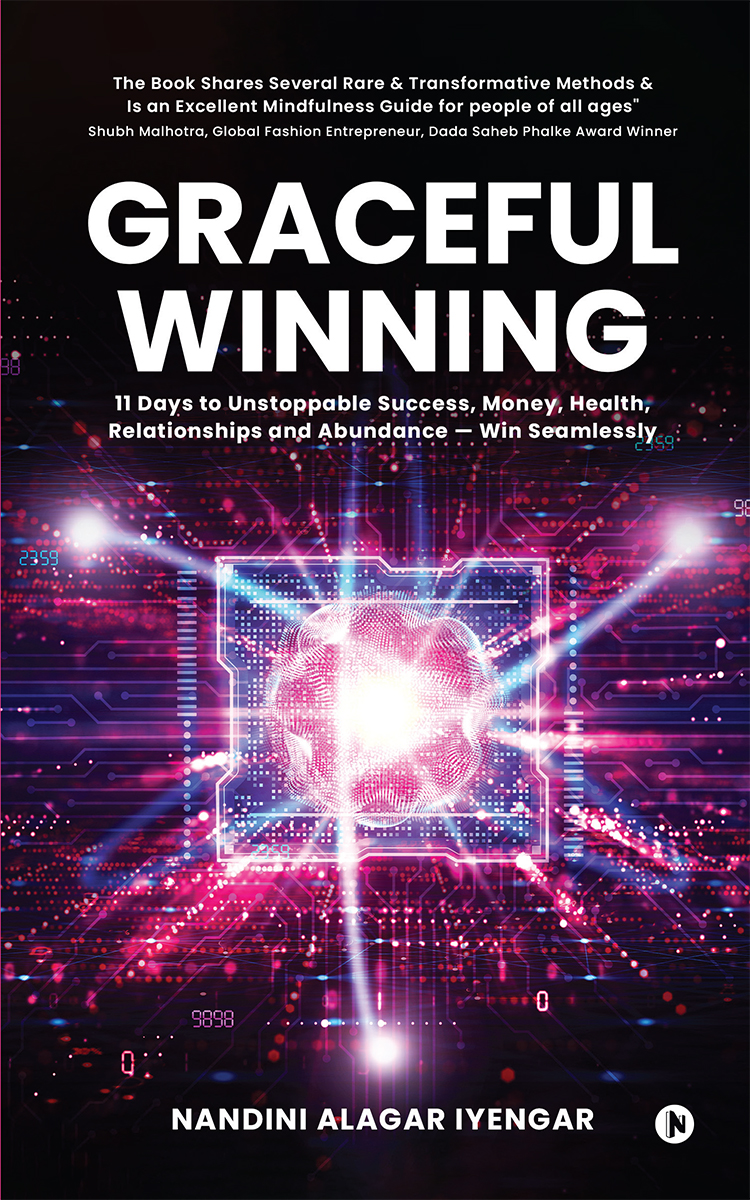



Explore NLP, Epigenetics & Mindset Transformation
Whether you are searching for NLP books for transformation, epigenetics self-help, breaking inherited patterns, subconscious reprogramming books, ancestral healing, limiting beliefs NLP, neuroplasticity books, rewrite your story, gene expression and emotions, inner child healing books, identity reprogramming, mindset transformation books, or NLP for healing — Rewrite Your Gene Story is the most complete, scientifically grounded, and practically powerful guide available.